
Taylor Powell · 10 October 2026
Charting the Migration Patterns of Heirloom Bitter Compound Formulas Through Decentralized Ledger Networks Among Preservationists
Preservationists have tracked heirloom bitter compound formulas moving through decentralized ledger networks for several years, with data showing patterns that link traditional extraction methods to digital verification systems. These networks record each transfer of formula details, including ingredient ratios and processing steps, while maintaining anonymity for contributors across multiple regions. Studies from research institutions indicate that entries often originate in one geographic area before appearing in others through shared ledger entries, creating traceable yet distributed histories.
Decentralized Networks and Formula Documentation
Decentralized ledger systems store metadata on bitter compound formulas without central oversight, allowing preservationists to append notes on sourcing and aging techniques directly to each record. In October 2026, network activity logs revealed a spike in entries from European and North American nodes that referenced older Asian and South American base formulas. Observers note that timestamps and hash chains connect these migrations to earlier uploads, forming chains that researchers can analyze for patterns of knowledge exchange. Figures from academic reports show that over 1,200 distinct formula variants appeared on public ledgers between 2023 and 2026, with many undergoing incremental updates during each hop.
Geographic Distribution of Records
Data compiled by university teams in Canada and Australia demonstrate that ledger entries cluster around communities with long histories of bitter extract production, such as those using gentian root or cinchona bark. One analysis found that formulas first documented in Andean regions later surfaced in ledger segments associated with European preservation groups, often with added annotations on climate-adjusted harvesting. Another set of records originating in Mediterranean areas migrated toward North American nodes, carrying details on fermentation durations that matched historical texts from the source locations. These movements occur through voluntary uploads rather than automated processes, as participants select which elements to share while preserving core compound ratios.
Preservationists use cryptographic signatures to verify the integrity of each formula segment during transfer, reducing the risk of alteration. Research indicates that such signatures allow later users to confirm whether a migrated record matches its original ledger entry, creating a reliable audit trail across borders. In practice, this system supports groups that focus on maintaining varietal purity for ingredients like wormwood or gentian, where small changes in compound balance can shift final product characteristics.
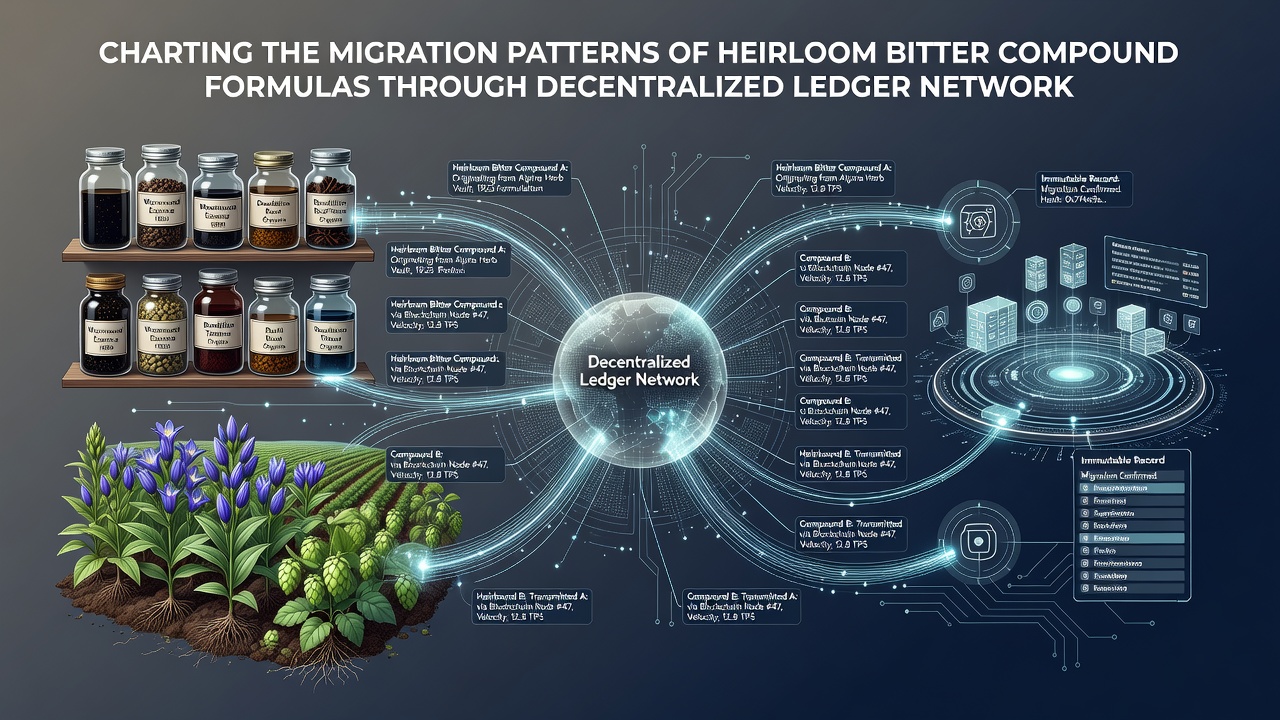
Analysis of Migration Pathways
Network mapping tools applied to ledger data reveal that migration pathways often follow seasonal cycles, with increased activity during harvest periods in source regions. A report from a European research consortium documented that certain bitter compound formulas moved from South American nodes to Australian preservation circles within three months of initial upload, carrying metadata on soil conditions and extraction solvents. Those who study these patterns have identified recurring routes that link high-altitude growing areas to urban documentation hubs, where additional processing notes accumulate before further distribution.
According to records maintained by international agricultural databases, similar documentation practices appear in efforts to preserve traditional knowledge around medicinal and flavor extracts. Preservationists add fields for pH levels, temperature ranges, and storage methods to each ledger entry, allowing downstream users to replicate conditions that influence compound stability. This structured approach has produced datasets that span multiple continents while remaining accessible through open ledger protocols.
Verification and Cross-Referencing Practices
Cross-referencing occurs when preservationists compare ledger entries against physical samples or archived texts, confirming that digital records align with tangible outcomes. Teams in the United Kingdom and New Zealand have published findings that show successful matches between migrated formulas and revived extracts produced under controlled conditions. These verifications rely on ledger timestamps to establish priority of documentation, helping groups avoid duplication while building cumulative knowledge bases.
External resources such as FAO documentation on heritage agricultural practices provide context for how decentralized systems complement existing preservation methods. Additional data from academic repositories illustrate how ledger networks reduce loss of detail during knowledge transfers across generations and locations.
Conclusion
Overall patterns show that heirloom bitter compound formulas continue to circulate through decentralized ledgers as preservationists add layers of verification and geographic context. The resulting records form an expanding map of movements that researchers can query for insights into knowledge continuity. Continued monitoring of ledger activity will supply further data on how these systems support long-term retention of compound-specific information across dispersed communities.